


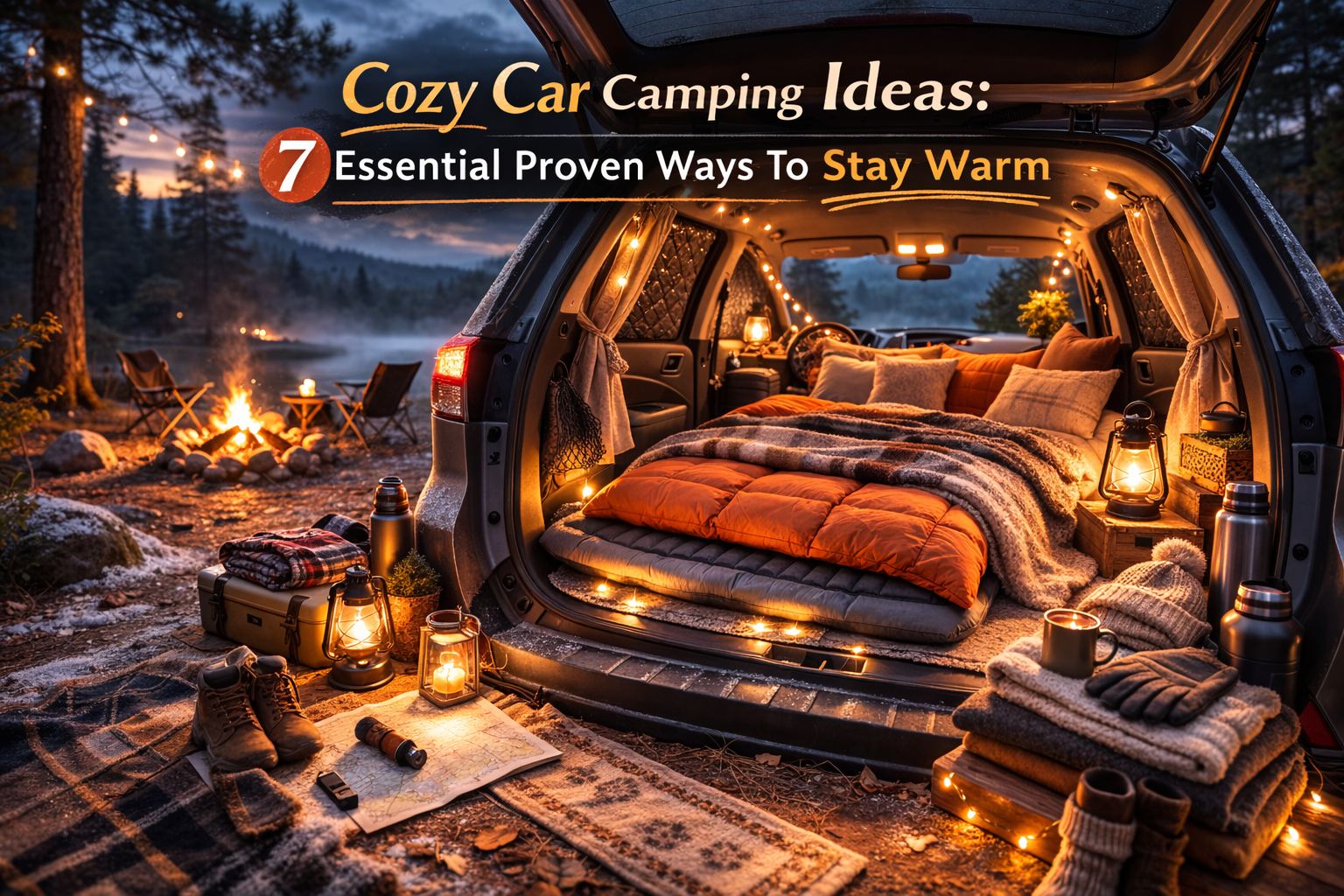
Cozy car camping ideas aren’t just about pretty lights or plush pillows—they’re about staying genuinely warm, dry, comfortable, and organized inside a standard car, even if you’re new to weekend camping.
If you worry about cold drafts, freezing water, condensation, or overpacking, you’re not alone. Setting up real-world comfort in a regular vehicle takes smart gear choices, simple mods, and a routine you can do solo in half an hour. Here’s a data-driven, gear-first guide to building a cozy car camping setup—without the hype.
Key Takeaways
- Insulation and pad R-value matter more than extra blankets. Budget R-value pads and sleeping bags provide the biggest warmth boost per dollar.
- Efficient workflow: Set up privacy, inflate, insulate, and organize gear in sequence to maximize warmth and minimize fuss—most setups take 15–30 minutes.
- Start with essential gear—pad, bag, blanket, water jug, lighting—and avoid overpacking. Realistic cozy setups run $800–$2,500, depending on cold-weather ambition.
- Why “cozy” matters for car camping (goals and constraints)
- Highest-impact warmth upgrades and efficient car camping setup
- Advanced analysis & common pitfalls (and proven fixes)
- Conclusion
- FAQ
Why “cozy” matters for car camping (goals and constraints)
“Cozy” for car camping isn’t about luxury—it’s about thermal comfort, good sleep, privacy, and minimum hassle inside the basic four doors you already own. Think of it as turning your car’s interior into a warm micro-cabin for a night or two, not a van conversion. The bar is comfort without compromise on warmth or practical privacy, using gear and steps you can handle solo—even as a first-timer.
Most weekend cozy car camping setups range from $800–$2,500, depending on how low you want to camp below freezing. Your main constraints: vehicle space, resistance to condensation and drafts, keeping setup fast, and spending wisely for warmth instead of aesthetics. With the right sequence and key upgrades, modest cars can deliver near-backcountry sleep quality without the headache of van builds.
Highest-impact warmth upgrades and efficient car camping setup
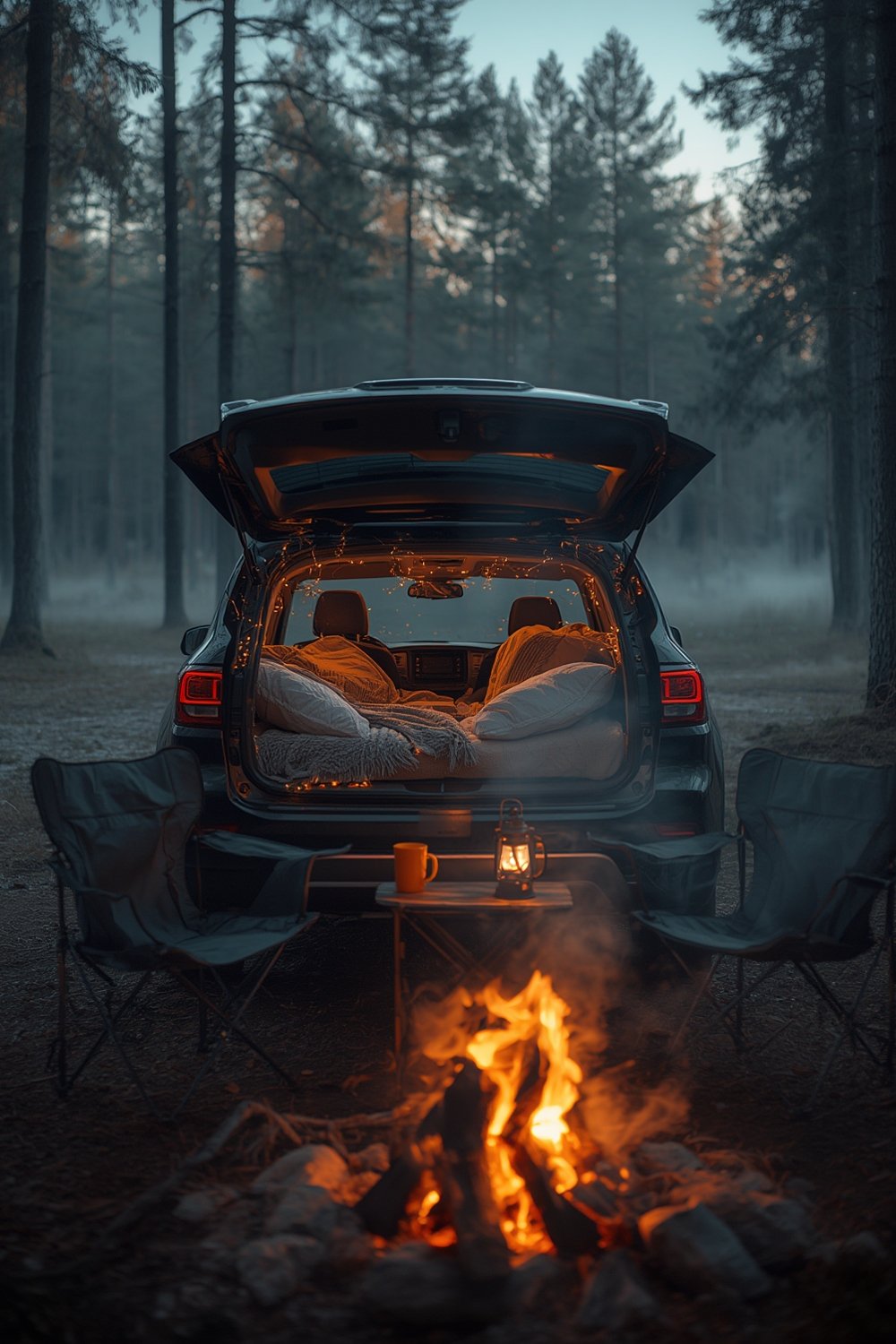
Most comfort mistakes come from piling up random blankets and overpacking. The science says: hit thermal insulation first, then smart accessories, and work through a logical workflow. Here’s how you actually get car camping cozy, even in a basic sedan or hatchback:
1. Prioritize Insulation: Start at Ground Level
- Invest in a high R-value sleeping pad. This single upgrade does more for warmth than stacking sleeping bags.
- Exped MegaMat Max 15 Duo: R10.6, $429 (ultra-warm, premium).
- Klymit Insulated Static V Luxe: R5, $120 (budget high-R upgrade).
2. Sleeping System: Layer for the Expected Nighttime Temp
- Pair pad insulation with a bag rated 10–20°F lower than forecast temps.
- Montbell Down Hugger 800: 0°F bag, $569, ideal for subfreezing use.
- Add a Rumpl NanoLoft Blanket ($179) for boost, multi-use, or as an emergency wrap.
3. Quick Privacy & Insulation Mods
- Window covers: Use reflectix, insulated panels, or even wool blankets as window shades for both privacy and extra warmth.
- Luno Car Air Mattress: Designed for quick inflation in ordinary vehicles—skip the tent, sleep warmer and drier.
4. Core Utility Upgrades
- Water: Prevent freezing with a Stanley insulated jug ($50).
- Stove: For reliable hot food, skip canisters below freezing—use a liquid-fuel MSR WhisperLite ($90).
5. Lighting & Ambiance, Small-Car Style
- Choose lanterns with dim/adjustable or red-light mode. rechargeable lantern or Spot 400 are both compact and rechargeable, no glare, no single-use batteries.
Step-by-Step Efficient Cozy Car Camping Setup (15–30 minutes solo)
- Park level, orient nose downwind for less breeze and privacy if possible.
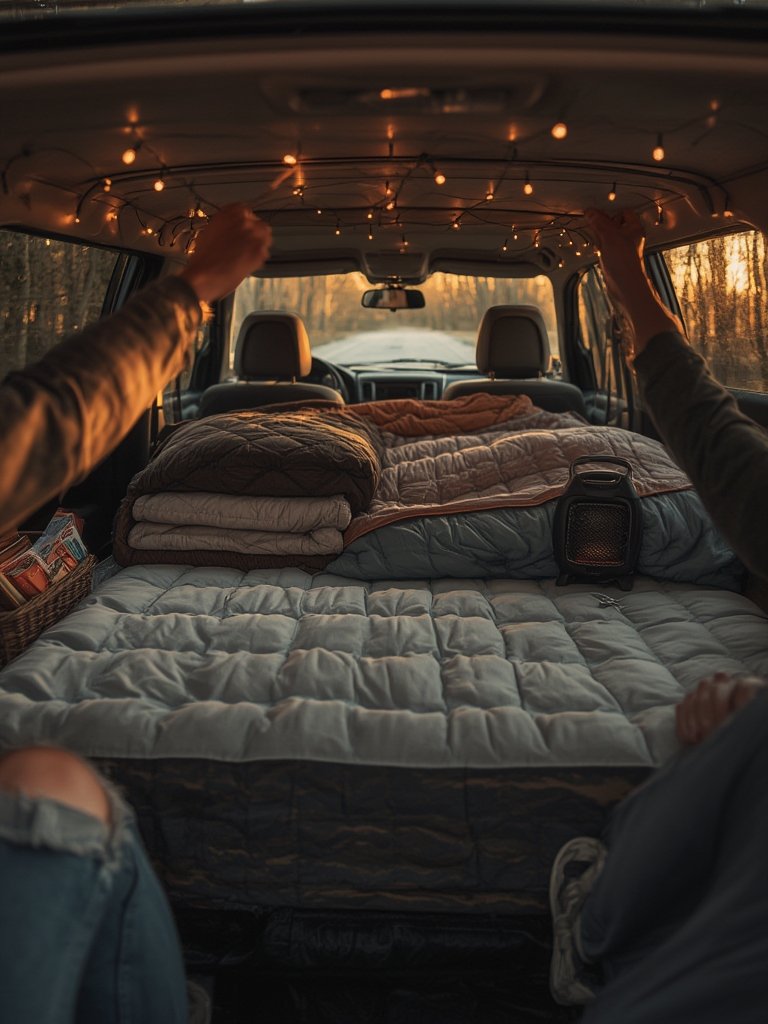
- Install window insulation or privacy covers (reflectix/blanket in rear and side windows).
- Fold seats, clear sleep area, and inflate mattress or sleeping pad (Luno, Exped, or Klymit).
- Lay down pad, top with bag and blanket immediately to trap air warmth early.
- Place water and lighting within reach; use LED headlamp in “red” mode to preserve night vision and avoid that harsh “car interior” glare.
- Set up stove or cook station outside if you plan hot meals (liquid-fuel if below freezing).
For more organizational hacks, see this car camping checklist and these camping hacks to avoid forgetting critical steps or gear.
Minimalist Packing Layout for Standard Cars
- Trunk or hatch: Sleep pad, bag, blanket loaded last (easy access).
- Side door pockets: Lighting, water jug, earplugs, phone charger/power bank.
- Stove and cookware: Small crate behind passenger seat for fast outdoor deployment.
- Foldable window covers stack flat under the pad when not in use.
- Stash insulated jug behind seat to minimize spillage risk and keep it off cold floors.
Organizing with this simple logic trims minutes off your workflow and drastically reduces setup fatigue.
Advanced analysis & common pitfalls (and proven fixes)
Even with solid gear, most “cozy car camping setup” attempts fall short due to avoidable errors and bad purchase priorities. Here’s what trips up new campers and how to get it right, according to field tests and experienced users:
Common Comfort Failures
| Failure | Why it Happens | Proven Fix | Gear Example |
|---|---|---|---|
| Cold Drafts from Windows/Doors | Too little insulation, gaps at window edges | Cut reflectix/shades for all windows, use wool or Rumpl blankets for curtains | Pendleton Wool ($269), Rumpl NanoLoft ($179) |
| Underbody Cold “Seep” | Summer pads (low R-value), cold car floor | Upgrade to 4.5+ R-value sleeping pad; stack foam under air pads | Klymit Insulated ($120), Exped MegaMat ($429) |
| Frozen Water in Bottles | No insulated storage, left on cold floor overnight | Use insulated jug, keep covered in sleeping area | Stanley Jug ($50) |
| Canister Stove Fails to Light/Flow | Fuel gels or sputters below freezing | Swap for liquid-fuel models (e.g., MSR WhisperLite) | MSR WhisperLite ($90) |
| Condensation Drips | No airflow, closed windows | Crack a window away from the wind, use moisture-absorbing packs | – |
| Loud External Noise | Urban/lot camping, thin windows | Layer wool blankets, wear earplugs, use white noise app | Pendleton ($269), Rumpl ($179) |
| Overpacking, Setup Fatigue | Poor workflow, too many “nice-to-haves” | Follow strict 5-category packing order; keep non-essentials at home | See camping checklist for beginners |
What to Buy First (And What to Skip)
- First: Pad, sleeping bag, insulated blanket, jug, lantern (in that order).
- Multi-use gear: Packable blankets (Rumpl) double as wrap and curtain, power bank like Denvix doubles as inflator/charger, air mattress (Luno) replaces “van” platform without any mods.
- Skip: Multiple pillows, bulky collapsible furniture, heavy battery banks (unless below 20°F nightly)—they rarely help cozy car camping ideas succeed in a compact car.
Some “nice” gear has drawbacks—Rumpl is flammable near stove sparks, and basic power banks lose efficiency fast below freezing. See this minimal cozy camping guide for more on what pays off vs. what clutters.
Cost Breakdown: Budget vs. Luxury Cozy Car Camping
| Category | Example Gear | Cost | Comfort Purpose |
|---|---|---|---|
| Must-have Sleep | Klymit Pad | $120 | Insulation from cold floor (R5) |
| Must-have Sleep | Montbell Down Hugger 800 (0°F) | $569 | Full overnight warmth |
| Warmth Add-on | Rumpl NanoLoft | $179 | Extra blanket, wrap, or privacy curtain |
| Utility | MSR WhisperLite | $90 | Hot food/drinks in any weather |
| Utility | Stanley Insulated Jug | $50 | No frozen water overnight |
| Luxury Add-on | Exped MegaMat Max 15 Duo | $429 | Maximum warmth, plush sleep |
| Luxury Add-on | Pendleton Wool Blanket | $269 | Top-off warmth, keeps warm when damp |
| Luxury Add-on | Diesel Heater | $1,685 | Extreme subzero comfort |
Entry setups average about $1,000. Luxury setups can exceed $2,000. Experienced campers suggest investing first in insulation (pad, bag), then upgrading blankets and lighting rather than jumping to big-ticket heaters or specialty furniture. A great cozy camping checklist can help prioritize your buys.
Conclusion
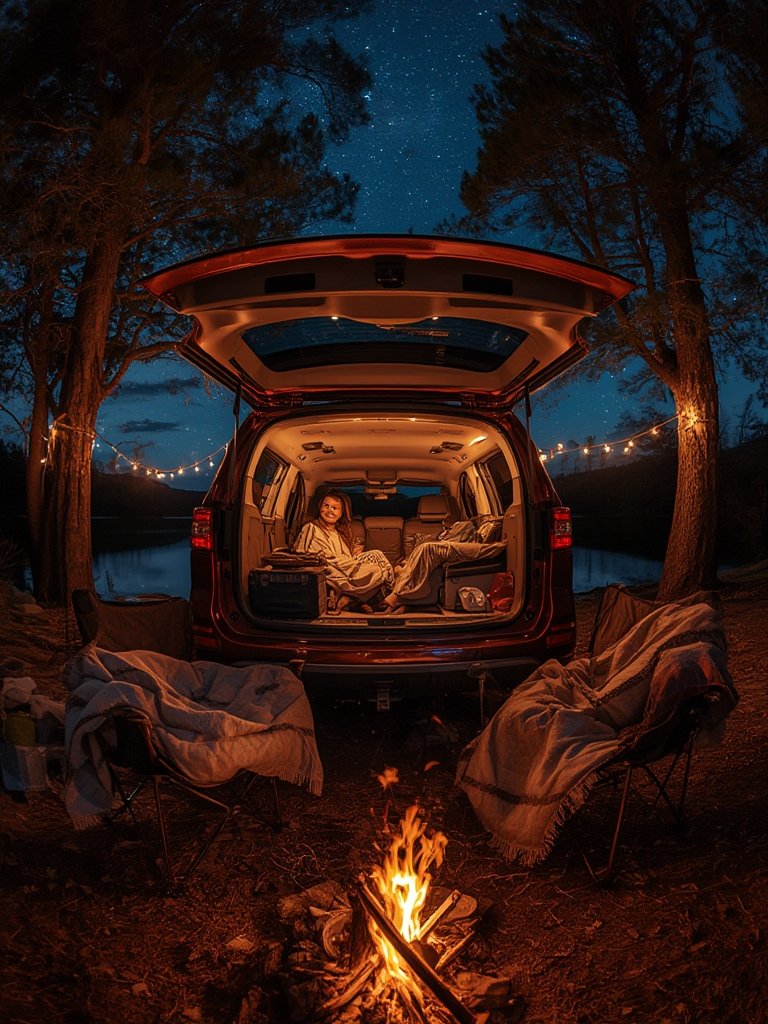
Cozy car camping ideas actually work in standard vehicles—if you invest in high R-value insulation, use efficient setup workflows, and carry only multi-use, proven gear. Skip the endless extras and follow a clear, prioritized checklist to stay warm, dry, and genuinely comfortable even if you’re a beginner.
Your cozy car camping setup should never be overwhelming or break your budget. Start small, scale for cold, and focus on warmth, privacy, and good sleep. Bring less, but better. Ready to assemble your own streamlined, efficient car-camping oasis? Download a checklist, check your gear order, and hit the road for a real cozy experience—no van required.
FAQ
What is the fastest way to warm up a standard car for sleeping?
Block window drafts with reflectix or wool blanket panels, inflate a high R-value pad, and lay out sleeping bag and blankets immediately. Limit door openings after setup. Never run your engine for overnight heat—it’s dangerous.
How do I keep water from freezing during winter car camping?
Use an insulated jug like the Stanley 2-gallon. Store it in your sleeping area or wrap it with a blanket overnight. Avoid leaving water on the floor or trunk interiors exposed to cold air.
Can I use a normal electric blanket in my car?
Standard electric blankets require a high-capacity power bank or DC converter, which often drains batteries quickly and is not recommended for beginners. Focus on insulation, pad + bag pairing, and multi-use blankets like Rumpl for robust warmth.
How do I prevent condensation while car camping?
Crack a window on the leeward side (out of the wind) to allow some air flow. Avoid cooking or drying wet clothes inside. Wool blankets help stay warm even if interior dampness rises.
What’s the best all-in-one packing checklist for cozy car camping?
Follow this streamlined routine: 1) High R-value pad, 2) 10–20°F under-temp sleeping bag, 3) Insulated blanket, 4) Water jug, 5) Rechargeable lantern, plus privacy window covers. Skip extra furniture and duplicate gear. For a printable version, see this camping checklist for beginners.