


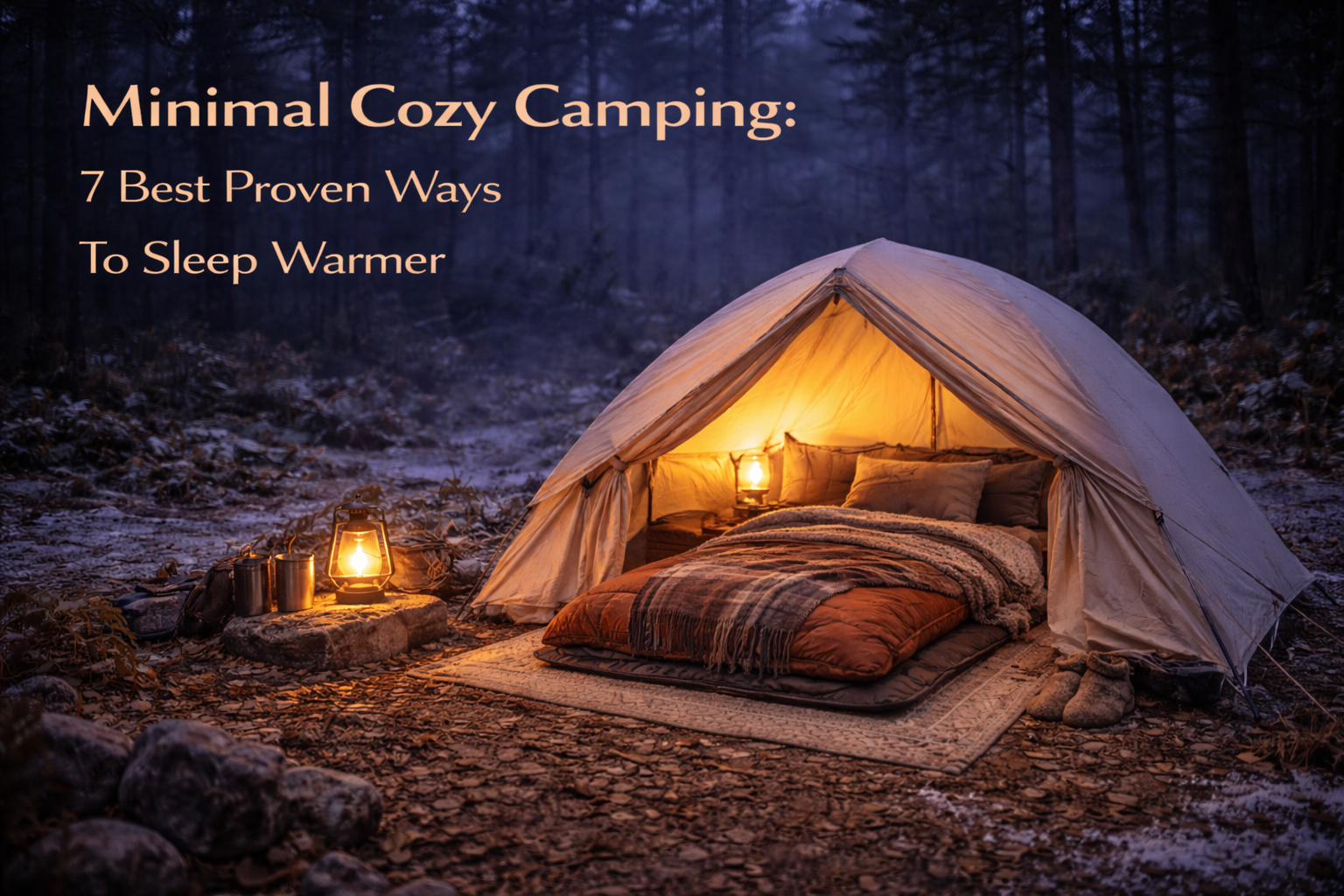
Minimal cozy camping gives you the best parts of the outdoors—comfort, warmth, and simple meals—without piling your car or RV full of bulky, generic gear. Most advice hands you complex checklists or expensive gadgets. Here, you’ll get proven, compact fixes (and how much they actually cost), so you can enjoy real coziness with less.
Key Takeaways
- Minimal cozy camping focuses on practical warmth, comfort, and cooking with the least gear possible—perfect for value-driven beginners who want less clutter and fast setup.
- Choosing versatile, mid-priced, and sustainable items delivers the most comfort-per-ounce and matches current market trends.
- The biggest comfort wins come from compact sleep systems, seat solutions, smart insulation, simple lighting, and a mini kitchen—carefully prioritized for impact not quantity.
- Why minimal cozy camping is gaining traction now
- Where minimalist campers run into comfort problems
- Low-bulk, proven fixes beginners report as effective
- Market trends that matter for cozy-minimal gear selection
- Overlooked cozy elements top articles miss
- Building a beginner-friendly minimal cozy kit — realistic price band
- What’s missing from spec sheets — gear specs novices should demand
- Setup and teardown realities: ultralight vs traditional gear
- The single overlooked high satisfaction-to-weight item to consider
Why minimal cozy camping is gaining traction now
Minimal cozy camping—sometimes called minimalist camping—is booming because campers today want comfort and experience without amassing piles of specialized gear. Factors driving this movement include frustration with high-priced, single-use equipment and a growing preference for versatile, eco-friendly solutions. Recent industry data shows the U.S. camping and hiking gear market reached $8.61 billion in 2024 and is projected to grow 4.2% annually through 2030 (Accio Sales Data, 2025).
Buyers are skipping complicated lists and going straight for a simple camping setup with gear that packs small but delivers real-world coziness. Eco materials and reliable brands—often at a middle price point—now dominate shelves, helping even beginners assemble a kit that works without breaking the bank.
Where minimalist campers run into comfort problems (real, common issues)
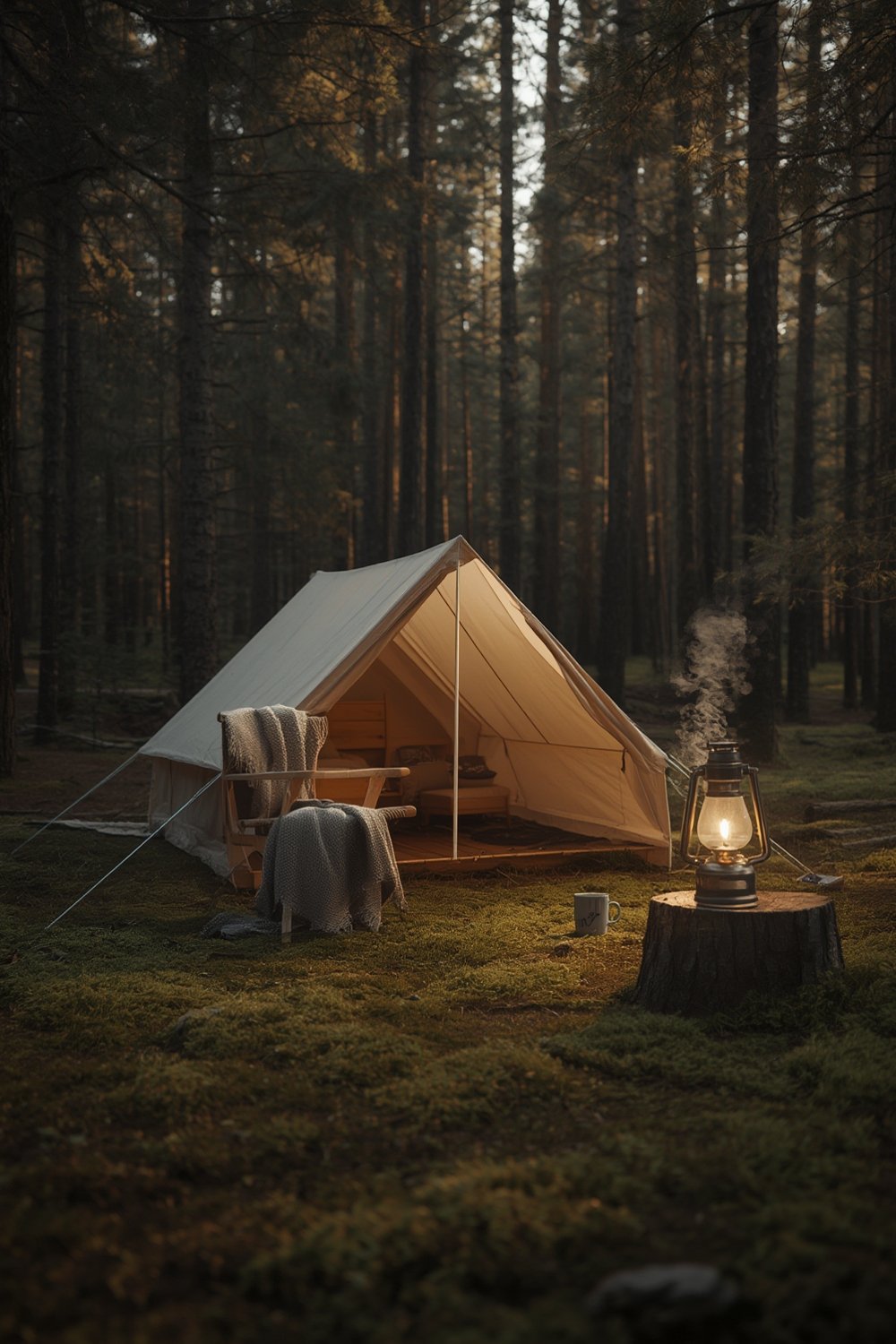
Eager campers often realize their simple camping setup is missing the “cozy” factor. Common problems experienced by beginner and minimalist campers include:
- Poor sleep quality: Thin pads, drafty bags, uncomfortable ground.
- Chilly mornings/nights: Insufficient layering or insulation.
- No convenient seating: Sitting on rocks or logs becomes tiresome fast.
- Moisture and condensation: Inadequate gear waterproofing or coverage.
According to market research, sleeping bags and compression sacks saw a surge in sales (from 691 to 1,793 units between April and August 2025), yet beginners and intermediates still wrestled with basic pain points, such as poor waterproof fabric and unreliable zippers (Accio Sales Data, 2025).
Read more about practical fixes for cold nights in the minimal cozy camping: 7 Best Proven Ways To Sleep Warmer guide.
Low-bulk, proven fixes beginners report as effective
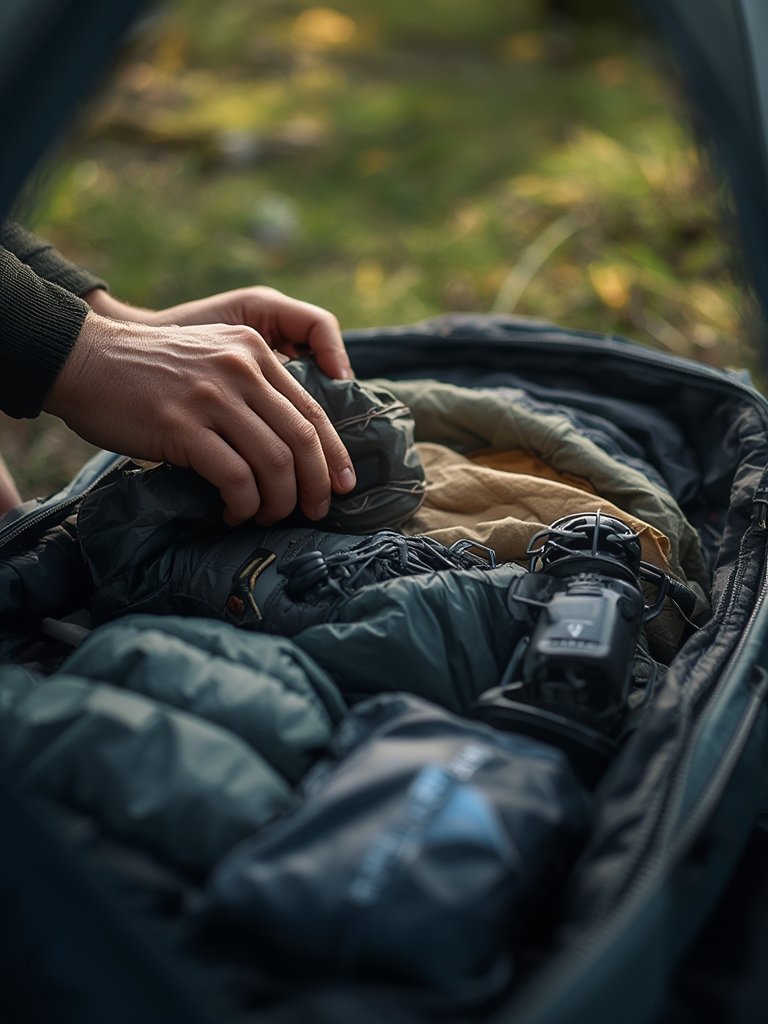
A minimal cozy camping kit works because each piece is prioritized by comfort-per-ounce, not just tradition or generic advice. Here are field-tested, packable solutions newbies find most effective:
- insulated sleeping pad + sleeping bag liner combo: Gives you warmth, insulation from cold ground, and a boost to your sleep quality without bulk.
- Packable camp chairs or foam pads: Folding stools or ultralight pads offer lasting comfort versus bare logs (often under 2 pounds).
- Compact heat tricks: Small Nalgene bottles with hot water inside bags, reflective emergency blankets as ground layers, and tent “skirts” using jackets or tarps for wind defense.
- Multi-use kitchen items: A deep, lidded pot works as a bowl, mug, and storage; titanium sporks cut down utensils to one item. A single-burner canister stove heats water and cooks easily in minutes.
If you want more step-by-step help, check out our camping checklist for beginners.
Market trends that matter for cozy-minimal gear selection
Buying “minimal cozy camping” gear isn’t just about less—it’s about picking smarter items that do more and last longer. Industry trends shaping this niche include:
- Sustainability: Eco-friendly materials are now standard in quality brands (White Duck Outdoors, 2024).
- Multi-functionality: Gear that serves several jobs, like jackets that double as extra sleeping insulation or tents with attachable vestibules.
- Mid-price dominance: 44.7% of the camping gear market leans into reliable, “medium” price items—not the cheapest but not premium—balancing cost and quality (Accio Sales Data, 2025).
To get a sense of the latest smart, compact products, visit Knowledge Sourcing – Camping Equipment Market.
Overlooked cozy elements top articles miss (high-impact, low-bulk)
Most top “minimalist camping” guides miss a few comfort essentials. Here’s what’s truly game-changing:
- Reflective insulation hacks: Use mylar or emergency blankets under sleeping pads or wrapped around footboxes.
- DIY tent skirt: Clip rain jackets or pieces of a lightweight tarp around your tent base to block drafts and moisture—a tip rarely mentioned on mainstream lists.
- Portable lighting tricks: A tiny string of USB LED fairy lights can transform a tent or RV, using almost no space or power.
- Micro kitchen setup: A single covered titanium pot with a folding handle, plus a stove, covers boiling, reheating, and even frying.
- Hygiene/organization: A mesh stuff sack serves as a bathroom kit and keeps all small essentials grouped, so you never scramble in the dark.
To see exactly which essentials matter, read the cozy camping checklist and the cozy camping night setup for proven warmth strategies.
Building a beginner-friendly minimal cozy kit — realistic price band
What does a starter minimal cozy camping kit cost?
- Shelter: $90–180 (decent 2-person tent with solid waterproofing)
- Sleeping system: $75–160 (insulated pad + 3-season bag + sheet/liner)
- Seating: $35–75 (folding stool or ultralight chair)
- Cooking pieces & light: $40–95 (pot, burner, basic lantern or USB lights)
Total starter kit (all new): roughly $240–$510—right in line with the most popular mid-range products dominating the 2025 market (Accio Sales Data, 2025).
Splurge on sleep and shelter. Save on eating utensils, and lighting (basic USB lights work wonders). Mix used and new if on a tight budget. Checklists like the car camping checklist offer a useful starting point.
What’s missing from spec sheets — gear specs novices should demand for 3-season comfort
Most big-box outdoor stores won’t tell you which numbers actually matter for minimal camping cozy setups. Here’s what to look for, even if some spec info is sparse:
- Sleeping pad R-value: Look for R-value of at least 3 for spring/fall camping (the higher, the warmer).
- Packed weight: Keep total packed weight (including bag/pad/liner) under 7–8 lbs for car/RV trips; less if you walk far from the car.
- Tent specs: Hydrostatic head rating of 1,500–2,500 mm is a solid target for rain resistance in most U.S. campgrounds.
Manufacturers rarely spell out these comparisons, so check reviews and community guides. For clear minimum spec advice, the minimal cozy camping guide offers sleep system tips.
Setup and teardown realities: ultralight vs traditional gear
Minimalist camping promises faster setup and teardown—but there are trade-offs. What’s realistic for a beginner?
| Setup/Teardown Factor | Minimal Cozy Camping Kit | Traditional Kit |
|---|---|---|
| Time to setup (1–2 people) | 12–30 minutes | 20–45 minutes |
| Packing order bottlenecks | Wet tent/condensation | Bulky bags, awkward coolers |
| Ease of teardown | Quick dry, compact rollup | Multiple bags/totes to organize |
| Common frustration | Finding small pieces (stakes, mini lantern) | Bagging big chairs, folding tables |
While research did not provide full data for time comparisons, most campers report a simple camping setup takes half as long and requires less juggling of loose gear. For more organization hacks, see The 22 Best Camping Hacks.

The single overlooked high satisfaction-to-weight item to consider
One of the highest comfort-per-ounce items you can pack is the inflatable seat pad (sometimes called a stadium cushion). At 3–6 ounces, it insulates you from cold ground, doubles as a pillow, works inside or out, and packs smaller than a paperback book.
- Why it works: Sitting in true comfort, anywhere, is what most new campers miss. Most seats are either too bulky or not supportive. An inflatable pad keeps you dry, warm, and pain-free whether cooking or lounging.
- Trade-offs: Not as sturdy as a frame chair (may need checking for leaks on rough ground).
No available satisfaction-to-weight ratio studies exist for this exact item, but informal reviews continuously cite “bonus comfort” for very little space lost—making it our edit pick.
Conclusion
Minimal cozy camping isn’t about seeing how little you can pack—it’s about choosing compact, genuinely comfortable solutions that match your style and budget. Focus first on your sleep system, shelter, a small heat or light source, efficient cooking, and one piece of real seating. Revisit this guide and experiment—real minimal cozy camping is a process, not a prescription. Ready to upgrade your next trip? Start planning your minimal cozy camping kit today, and experience how much comfort less can bring.
FAQ
What is the most important gear for minimal cozy camping?
Your sleep system (insulated pad and bag/liner), compact shelter, and portable seat are the top three. These provide the biggest comfort improvements with the least bulk.
Can you really stay warm with such minimal gear?
Yes. Using an insulated pad rated for at least R-3, a 3-season sleeping bag, and adding simple reflective liners and tent skirt hacks can keep you warm into the shoulder seasons without a heavy load.
How much should I budget for my first minimal cozy camping kit?
Plan to spend between $240 and $510 for all new gear. Mix in used items when available, especially for cook sets and basic lanterns, but don’t skimp on sleep or shelter quality.
Are there things I should never cut from my kit?
Basics: reliable shelter, insulated sleep pad, weather-appropriate sleeping bag, compact lighting, and at least one solid seat or pad for comfort. Everything else can be chosen based on trip type and weather.
Where can I find more detailed packing lists and hacks?
Check guides like the 22 Best Camping Hacks or Minimal Cozy Camping Guide for step-by-step inspiration.