


### Blog Post:
Cozy car camping setup is the fastest way to turn your vehicle into a comfortable overnight retreat, but most first-timers underestimate both the benefits and possible headaches. Whether you drive an SUV, sedan, hatchback, or minivan, maximizing comfort inside a car isn’t as obvious as pitching a tent. Below, you’ll find a realistic, step-by-step guide—plus hard-earned tips and cold facts—so you can create a car camping experience that’s warm, restful, and safe.
Key Takeaways
- Choosing the right car and gear is the foundation of a cozy car camping setup, but small decisions on insulation and ventilation make a major difference.
- Common pitfalls include lack of privacy, poor mattress fitment, and underestimating temperature swings—even inside an enclosed vehicle.
- Advanced planning and a few budget-friendly tricks can dramatically boost comfort without requiring an expensive rig upgrade.
- The Core Concept: What Makes a Cozy Car Camping Setup?
- Step-by-Step Guide: How to Create Your Perfect Cozy Car Camping Setup
- Advanced Analysis & Common Pitfalls for Car Campers
- Conclusion: Is Cozy Car Camping Worth It?
- Frequently Asked Questions
The Core Concept: What Makes a Cozy Car Camping Setup?
At its heart, a cozy car camping setup means transforming your car interior into an inviting, restful space where you can relax and get real sleep. It sounds simple—add some bedding, maybe throw in a blanket, and call it a night. In reality, comfort depends on three pillars: insulation (to keep warmth in or out), privacy (mainly through window covers), and ergonomic sleeping arrangements that suit your specific vehicle type.
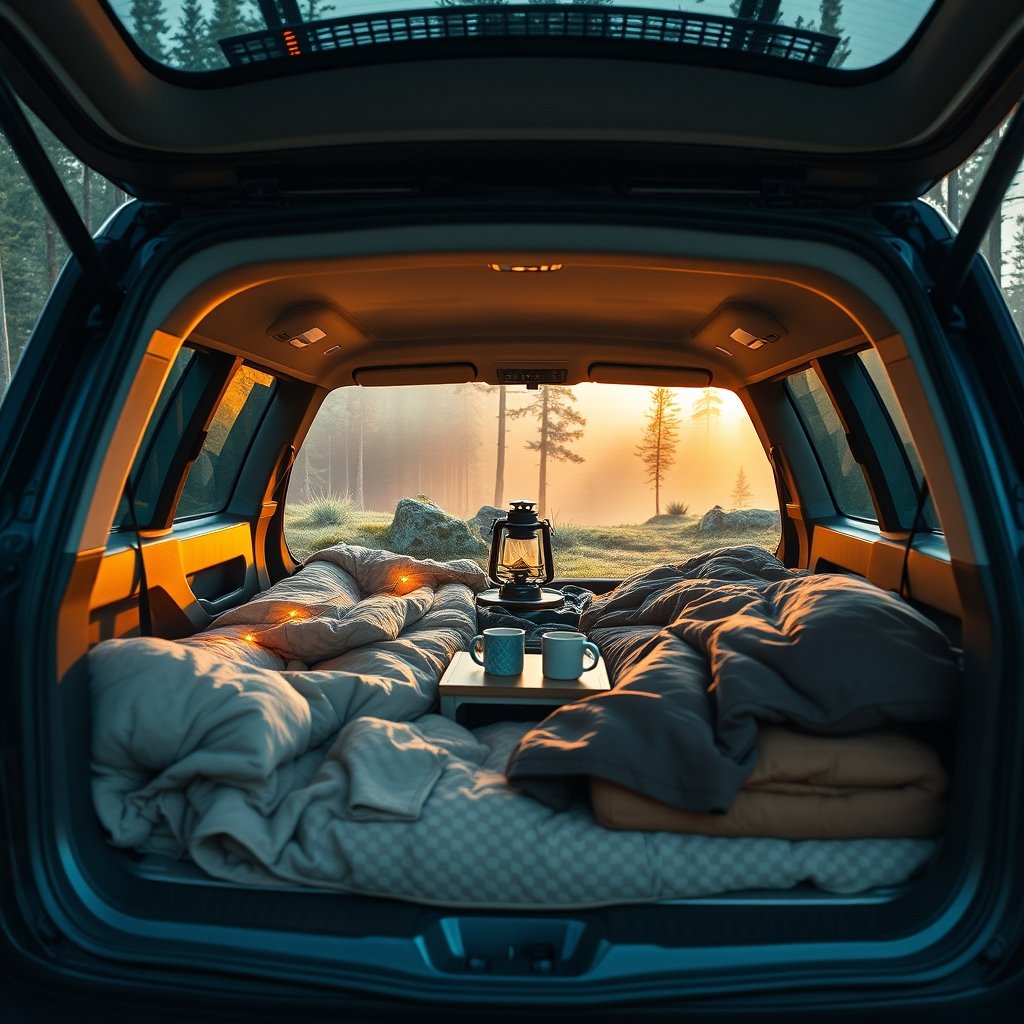
Unlike tent camping, car camping shields you from rain, wind, and critters. But with limited survey data in 2023-2024 about what campers prioritize inside their cars, we look at comfort-driven trends: more people are glamping (with beds and insulation), and campers overwhelmingly prefer trucks (53.3%) and SUVs (38.6%) for the extra room and flat surfaces (CarPro Survey). If you want a space that actually feels cozy after a long day, you’ll want to focus on smart gear selection, vehicle-specific adaptations, and functional safety habits for a peaceful night.
If you’re curious about ways to sleep warmer with minimal gear, see our minimal cozy camping guide for actionable ideas.
Step-by-Step Guide: How to Create Your Perfect Cozy Car Camping Setup
- Choose the Right Vehicle
Campers agree: bigger is usually cozier. SUVs and minivans provide flatter sleeping options and more space to stretch out. Sedans and hatchbacks work but expect some creative seat arrangements. Double-check your seat configurations before packing. - Plan Your Sleeping Platform
Lay down the rear seats if possible for a flat area. Place a foldable foam pad or self-inflating mattress that spans your available width—measure before you buy. Pro tip: Some mattresses labeled “car camping” only fit SUVs, not sedans. - Add Window Covers for Privacy
Blackout curtains or cut-to-fit reflective insulation panels keep things dark and private. They also block light and help regulate temperature. DIY with reflectix and velcro or buy custom-fit covers for your model. - Pile on Cozy Bedding
Use a fitted sheet, warm blanket, and compact pillow. Sleeping bags rated for the expected climate add insurance against cold nights. A heavy-duty blanket, like those in our camping bedding tips, makes a surprising difference. - Insulate the Floor and Doors
Lay down an old rug, foam mat, or yoga mats for extra insulation under your mattress. Gaps in the doors can leak cold air at night, so use weather stripping if you plan regular trips. - Ensure Safe Ventilation
Even in winter, crack a window by an inch or use mesh window inserts to prevent condensation and maintain air flow. Never run the engine while you sleep. - Dial in Lighting and Ambiance
Battery lanterns or soft LED string lights (see our warm camping lanterns guide) create a welcoming mood and help you wind down. - Packing and Storage
Use bins or soft bags for clothing and food so you don’t wake up tangled in clutter. Store bags under seats or in door pockets to save valuable floor space. - Heating and Cooling Tricks
For cold weather, safe heat packs or battery-powered heaters (approved for enclosed spaces) can help, but always follow safety precautions. In extreme heat, park in shade and ventilate early.
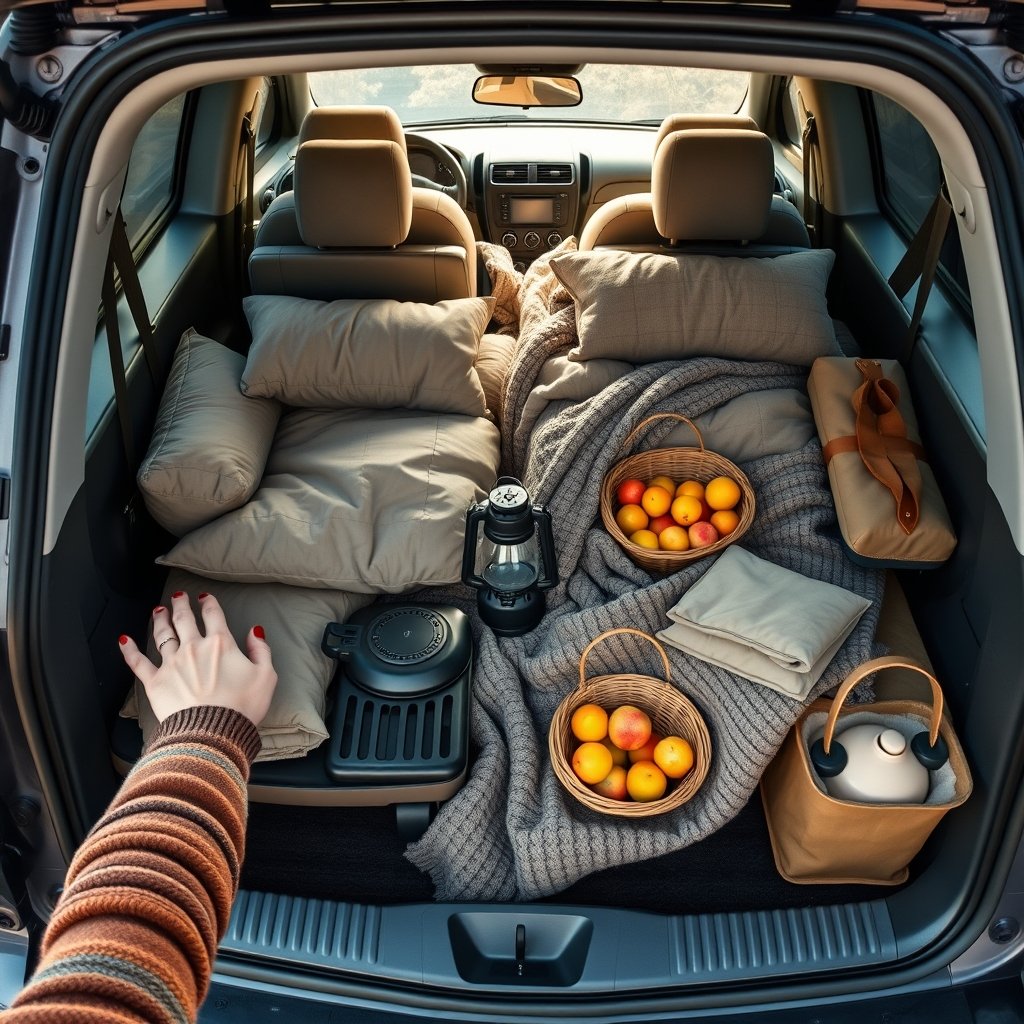
Need more detailed packing ideas? See our dedicated car camping checklist for a full comfort rundown and important must-haves.
Advanced Analysis & Common Pitfalls for Car Campers
Most problems with cozy car camping stem from trying to adapt setups designed for one vehicle to another—or missing the subtle challenges that make a night uncomfortable. Here are common pitfalls, realistic problems, and what research reveals:
- Mattress Doesn’t Fit: Most negative car camping reviews cite frustration with mattress fitment. Many “universal” mattresses only work in larger SUVs and minivans.
- Poor Insulation: Temperatures inside cars can swing sharply at night, especially in spring and fall. Most beginners underestimate the need for extra layers under and over the body.
- Lack of Privacy or Light Control: In urban camp sites or crowded lots, light leaks around window covers can ruin sleep and compromise privacy.
- Condensation & Ventilation Issues: Without airflow, interiors become clammy—even in winter. Foggy windows and musty smells indicate trapped moisture.
- Safety Hazards: Using unapproved heaters or blocking all air flow can risk carbon monoxide buildup. Always ventilate, even in cold weather. No official safety guidelines exist for 2023–2024 specific to car camping ventilation (Condor Ferries).
- Overpacking or Poor Storage: Limited floor space in sedans and hatchbacks can make every movement a struggle once you’re inside for the night.
- Noise and Comfort: Thin car walls don’t block campground noise, and city sites often have traffic disruptions—earplugs and eye masks help.
| Vehicle Type | Sleeping Space | Mattress Options | Pros | Cons |
|---|---|---|---|---|
| SUV | Ample; fold-flat seats | Most standard car mattresses fit | Spacious, easy to insulate | Reduced cargo capacity when beds in place |
| Minivan | Very large; removable seats | Custom foam, RV-style pads | Maximum comfort; best for families | Harder to blackout all windows |
| Hatchback | Moderate; angled seats often | Narrow, need custom foam | Good fuel economy; stealthy | Sloped surfaces make sleep tricky |
| Sedan | Limited; hard to lay flat | Inflatable pads, sleeping bags | Works for short trips; quick to warm up | Least comfortable, zero cargo room |
Data from CarPro Survey reveals the popularity of larger vehicles but not specific dimensions, so measure your interior carefully before committing to a mattress or blackout kit.
For a deeper dive into mistakes beginners make that cost sleep and money, study our newbie car camping mistakes guide.
Conclusion: Is Cozy Car Camping Worth It?
A cozy car camping setup is the bridge between roughing it under the stars and restful glamping. With careful planning—matching the right gear to your specific car—you’ll gain the privacy, warmth, and ease that make multi-night trips genuinely enjoyable. Realistically, space and comfort will never match a purpose-built camper, but your adaptability and the smart use of insulation, bedding, and ventilation can overcome most challenges. Ready to build your own cozy retreat?
Start with our cozy camping gear guide and upgrade your next outing. Share your best cozy car camping tip or ask a question below!
Frequently Asked Questions
Can I use any mattress for a cozy car camping setup?
No, the mattress must match your vehicle’s exact interior dimensions. Many “universal” car camping mattresses do not fit sedans or small hatchbacks. Foam mats can be trimmed to fit; always test before your trip.
How do I insulate my car for cold weather camping?
Use reflective window covers, foam mats on the floor, weather stripping around doors, and a thick blanket or sleeping bag. Avoid running your engine for heat; instead, layer up and use only safe, battery-powered hand warmers.
Is car camping safe for solo travelers?
Yes, but choose well-lit, legal sites (or established campgrounds) for safety. Lock doors, crack a window for ventilation, and keep your keys accessible. For more safety and privacy ideas, check our cozy camping night setup guide.
Will condensation build up inside the car overnight?
Yes, without ventilation even small amounts of moisture from breathing can cause condensation on windows. Always leave at least one window cracked and use mesh screens or vent inserts if you’re concerned about bugs or privacy.
Where can I find a complete checklist for car camping essentials?
For a practical, printable list (with budget options), see our camping checklist for beginners or the dedicated cozy camping checklist essentials.
—